

Satoshi Nakamoto’s Bitcoin Whitepaper Turns 18 This Halloween!
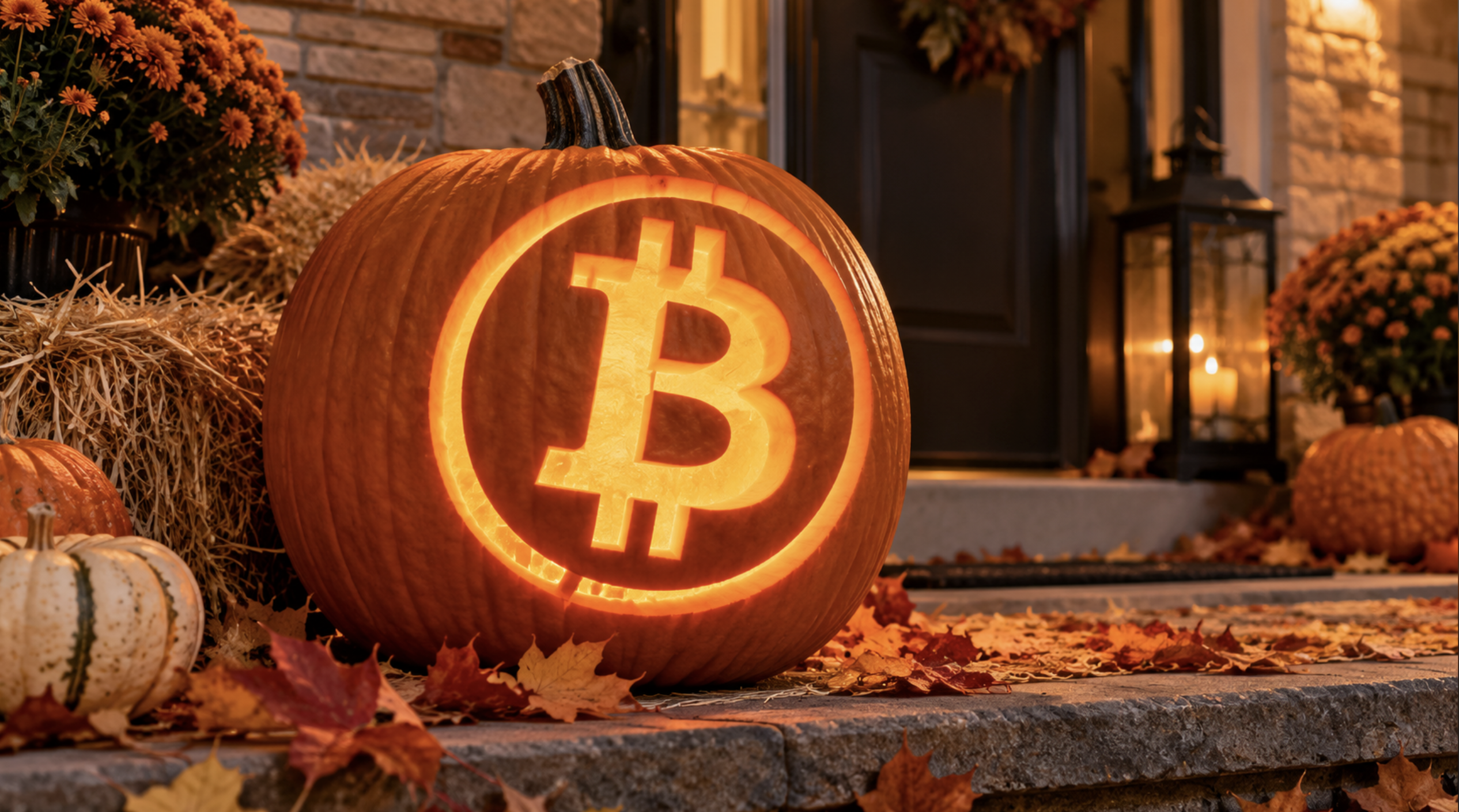
While Canadians are carving pumpkins into 🎃 jack-o’-lanterns, handing out candy and preparing for an evening of tricks and treats, the cryptocurrency community has another reason to celebrate: Bitcoin’s whitepaper is turning 18!
On October 31, 2008, an individual or group operating under the mysterious pseudonym Satoshi Nakamoto introduced the world to a revolutionary concept: a decentralized electronic cash system that could operate without banks or other trusted financial intermediaries.
Eighteen years later, Bitcoin (BTC) has officially reached adulthood, at least by the calendar. And like many teenagers entering their adult years, Bitcoin has experienced its fair share of growing pains, unexpected adventures and remarkable achievements. But unlike most 18-year-olds, Bitcoin has also managed to challenge the global financial establishment!
It all started on Halloween 2008, when Satoshi Nakamoto published a document titled Bitcoin: A Peer-to-Peer Electronic Cash System on an online cryptography mailing list. The proposal outlined how individuals could transfer digital money directly to one another without relying on a bank or payment processor to approve every transaction.
At the heart of the idea was a solution to the double-spending problem, a longstanding challenge involving the possibility of duplicating and spending digital money more than once. Satoshi proposed using a decentralized network, cryptographic verification and a process known as proof-of-work to maintain a shared transaction history. Instead of placing complete trust in one central institution, participants could independently verify transactions according to the network’s established rules.
You can still read the original Bitcoin whitepaper today. It’s surprisingly approachable for a document that helped launch an entirely new financial industry. Interestingly, the whitepaper was published during the global financial crisis of 2008, when confidence in traditional banking institutions was under considerable strain. The timing couldn’t have been more appropriate.
Although October 31 is widely celebrated as Bitcoin Whitepaper Day, the Bitcoin network wasn’t operational until January 3, 2009. That’s when Satoshi mined the first Bitcoin block, known as the Genesis Block. Embedded within that historic block was a reference to a headline from Britain’s The Times newspaper concerning another potential government bailout for banks. The message has become one of Bitcoin’s most recognizable historical details, often interpreted as commentary on the financial system Bitcoin was designed to challenge.

Just nine days later, on January 12, 2009, Satoshi sent 10 BTC to computer scientist Hal Finney in what is recognized as Bitcoin’s first transaction between two individuals. There were no cryptocurrency exchanges, Bitcoin ATMs, mobile wallets or exchange-traded funds. In fact, Bitcoin didn’t even have an established market price. It was an experiment supported by a small community of programmers, cryptographers and enthusiasts who believed digital money could work differently.
If Bitcoin’s early childhood was relatively quiet, its teenage years were anything but! Consider May 22, 2010, when programmer Laszlo Hanyecz famously paid 10,000 BTC for two pizzas. That transaction is now celebrated annually as Bitcoin Pizza Day. At the time, the purchase represented a major demonstration that Bitcoin could be exchanged for real-world goods.
Over the following decade, Bitcoin experienced extraordinary price increases, devastating market corrections, exchange failures, regulatory uncertainty and growing public attention. There were times when critics confidently declared Bitcoin finished. Think: How many times have you heard headlines over the last decade plus that read; “Bitcoin’s Dead”? Yet the network continued operating.
By January 2024, Bitcoin had achieved another milestone when the United States Securities and Exchange Commission approved the listing and trading of spot Bitcoin exchange-traded products. American investors could now gain exposure to spot Bitcoin through newly approved products trading on traditional securities exchanges. The development represented a remarkable shift for something originally conceived as an alternative to financial intermediaries. Bitcoin wasn’t replacing Wall Street. In some respects, Wall Street was embracing Bitcoin.
One of Bitcoin’s defining characteristics is its predetermined supply limit of approximately 21 million BTC. Unlike conventional currencies, which central banks can issue according to monetary policy decisions, Bitcoin follows an issuance schedule enforced through its network rules. New Bitcoin enters circulation as miners validate blocks and receive rewards for contributing computing power.
Those rewards are reduced approximately every four years through an event known as the Bitcoin halving or ‘Halvening’ in some circles. When Bitcoin launched in 2009, miners received 50 BTC per block. Following the fourth halving in April 2024, that reward fell to 3.125 BTC.
Another remarkable milestone arrived in March 2026, when the Bitcoin network surpassed 20 million BTC mined. That means more than 95% of Bitcoin’s eventual supply has already been issued, with the remaining coins expected to enter circulation gradually over the next century. The final fractions of Bitcoin are projected to be mined around the year 2140. Not bad for an 18-year-old!
Of course, reaching adulthood doesn’t automatically make someone sensible, predictable or immune to making mistakes. Bitcoin is no exception. Despite its growing recognition, Bitcoin remains a volatile asset capable of experiencing substantial price movements over relatively short periods.

Its market value responds to numerous factors, including investor sentiment, economic conditions, institutional demand, regulatory developments and broader financial market activity. Bitcoin’s price has reached extraordinary heights over the years, but substantial corrections have repeatedly followed periods of optimism. For Canadian investors, that makes research, financial planning and responsible purchasing decisions particularly important.
Fortunately, keeping an eye on Bitcoin’s performance is easier than ever. Our Bitcoin price chart in Canadian dollars allows Canadians to review recent BTC price movements and historical trends before making purchasing decisions. And remember, Bitcoin can be purchased in fractions. You don’t need enough money to buy an entire Bitcoin to participate.
Perhaps the most fascinating part of Bitcoin’s story is that its creator remains unidentified. Over the years, journalists, researchers and cryptocurrency enthusiasts have proposed numerous theories about the person or people behind the Satoshi Nakamoto pseudonym. Some have suggested prominent cryptographers, while others believe Bitcoin may have been developed by a small group of collaborators.
Despite considerable speculation, no individual has conclusively demonstrated that they are Bitcoin’s creator. Satoshi gradually withdrew from public involvement in the project around 2010–2011, leaving its development and maintenance to an international community of contributors. Eighteen years after the whitepaper appeared, Bitcoin continues functioning without its mysterious founder directing the operation. For supporters of decentralization, that’s one of the project’s most remarkable accomplishments. The technology has outgrown the individual who introduced it.
As Bitcoin approaches its third decade, important questions remain. Can Bitcoin become more practical for everyday purchases? Will technologies such as the Lightning Network make smaller transactions more convenient? How will governments approach regulation, and what role will institutional investors play in the years ahead?
There are also continuing discussions surrounding mining energy consumption, transaction fees, network security and the balance between decentralization and convenience. None of these questions has a simple answer. What makes Bitcoin particularly interesting is that its future will be shaped by developers, miners, businesses, investors and users around the world rather than a single company or government.
Here at MyBTC.ca, we’ve watched Bitcoin evolve from a relatively obscure digital experiment into one of the world’s most recognizable cryptocurrencies. As a proudly Canadian, non-custodial cryptocurrency exchange, we make it convenient for Canadians to buy and sell Bitcoin using familiar payment methods, including Interac e-Transfer, Bank Wire and Bill Payment.
Looking to explore the world of cryptocurrency? MyBTC.ca makes it easy for Canadians to buy and sell Bitcoin (BTC), Ethereum (ETH) and USD Coin (USDC) using convenient Canadian payment methods. Customers can also explore our Cryptocurrency FAQ for helpful information about getting started, transaction processing and cryptocurrency storage. Already own crypto? You can sell Bitcoin, Ethereum or USDC for Canadian dollars through MyBTC.ca.
So, as the pumpkins glow and the trick-or-treaters make their rounds this Halloween, take a moment to appreciate just how far Bitcoin has travelled. From a document shared on a cryptography mailing list to a globally recognized digital asset, it’s been quite the journey.
Happy 18th birthday, Bitcoin! Here’s to whatever adventures adulthood has in store.
Buy Now


I Want My Bitcoin!
Click a payment method to start your order.

Interac e-Transfer

Bank Wire

Credit or Debit Card

Flexepin Voucher